- Flipped.ai Newsletter
- Posts
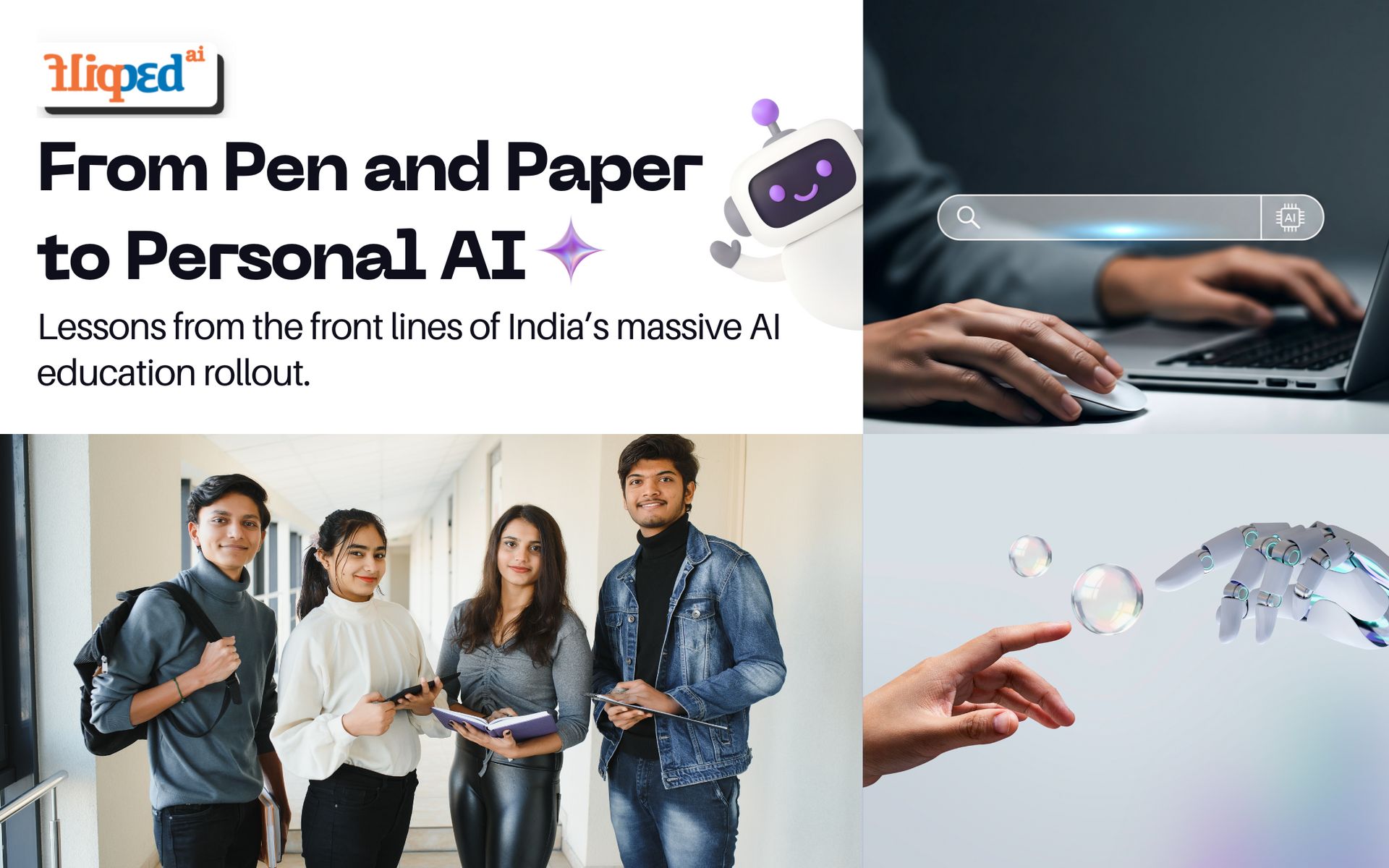
- From Pen and Paper to Personal AI
From Pen and Paper to Personal AI
Lessons from the front lines of India’s massive AI education rollout.


Thaarani Jayaraman & Arjuna Sathiaseelan
February 02, 2026
In partnership with

Transform your hiring with Flipped.ai – the hiring Co-Pilot that's 100X faster. Automate hiring, from job posts to candidate matches, using our Generative AI platform. Get your free Hiring Co-Pilot.
Dear Reader, 👋
As AI races into classrooms worldwide, a surprising shift is happening. The toughest lessons on how this tech can actually scale are emerging not from Silicon Valley, but from India’s schools.
Flipped.ai's weekly newsletter reaches over 75,000 professionals, innovators, and decision-makers worldwide. This week, we're exploring how India has become the global proving ground for AI in education and what this means for the future of learning.
Let's dive in! 👇
Before we dive in, a special shoutout to You.Com for supporting today’s edition.
One major reason AI adoption stalls? Training.
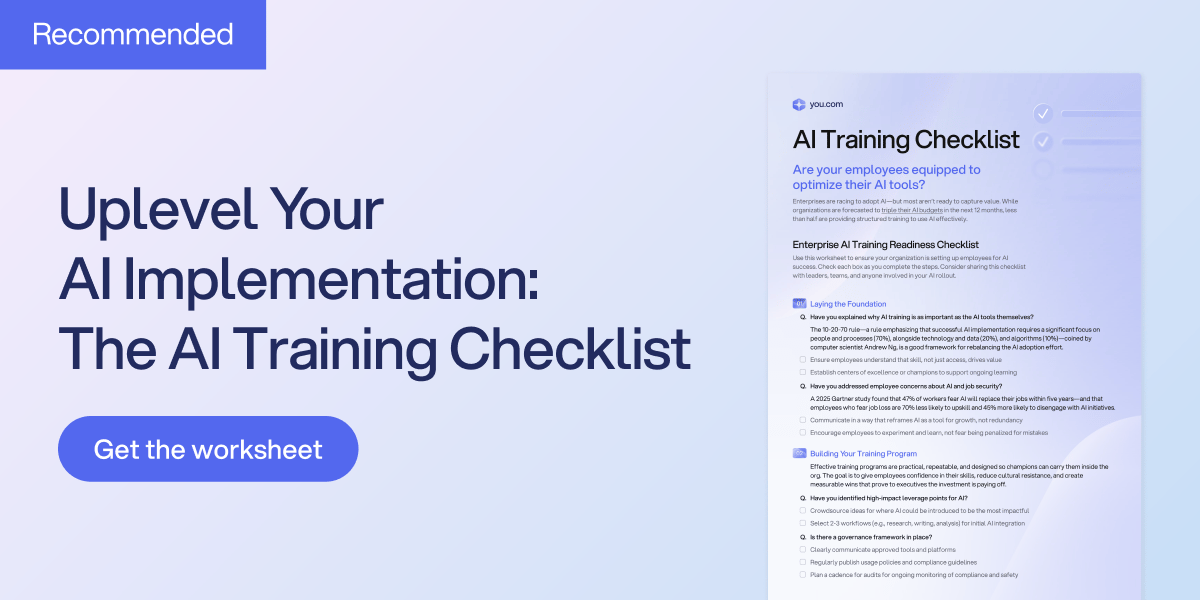
AI implementation often goes sideways due to unclear goals and a lack of a clear framework. This AI Training Checklist from You.com pinpoints common pitfalls and guides you to build a capable, confident team that can make the most out of your AI investment.
What you'll get:
Key steps for building a successful AI training program
Guidance on overcoming employee resistance and fostering adoption
A structured worksheet to monitor progress and share across your organization
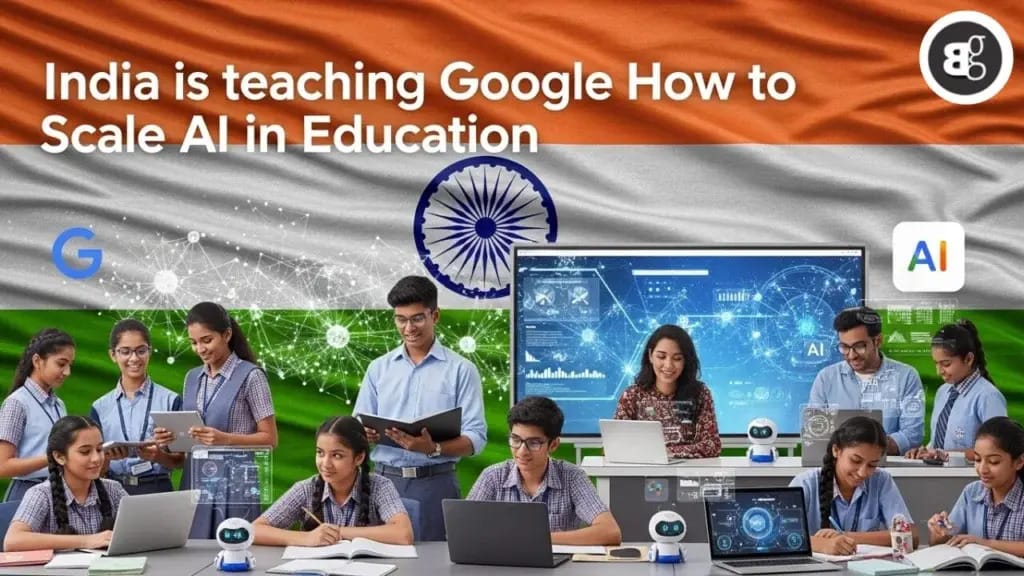
In India: The global lab for learning
With over a billion internet users, India now accounts for the highest global usage of Gemini for learning. This isn't just a statistic; it’s a massive real-world experiment involving 247 million students and 10.1 million teachers.
Google is realizing that the "one-size-fits-all" approach favored by Silicon Valley doesn't work here. Instead, they are bending their tech to fit a decentralized system where state governments, not tech companies, call the shots.
The scale of the challenge
India is currently managing one of the largest and most complex education ecosystems in the world. To put the sheer magnitude into perspective:
A massive student base: The school system now serves approximately 247 million students, making it a population-scale operation that surpasses the total population of many large countries.
An extensive infrastructure: These students are spread across a vast network of 1.47 million schools, ranging from high-tech urban centers to remote rural institutions.
The workforce behind the vision: Supporting this massive student body is a dedicated workforce of over 10.1 million teachers, who remain the primary point of control in Google’s new AI-centric strategy.
Higher education boom: The drive for learning doesn’t stop at the school level; higher education enrollment has surged to over 44.6 million students. This represents a staggering 26.5% increase since 2014, highlighting a decade of rapid expansion in India's universities and colleges.
TechCrunch
The "Teacher-first" strategy
In a bold move, Google is designing AI tools primarily for teachers, not just students. The goal? Assist with lesson planning and assessment while keeping the human relationship at the center of the classroom.
Multimodal learning: Since many classrooms aren't text-heavy, AI is being used to combine video, audio, and images to reach students across different languages and levels of access.
Infrastructure hacks: In schools where one-to-one device access is a dream, AI is being adapted for shared devices and offline-first environments.
From theory to reality: Major 2026 rollouts
India is no longer just "testing" it's deploying at scale. Some of the biggest moves this year include:
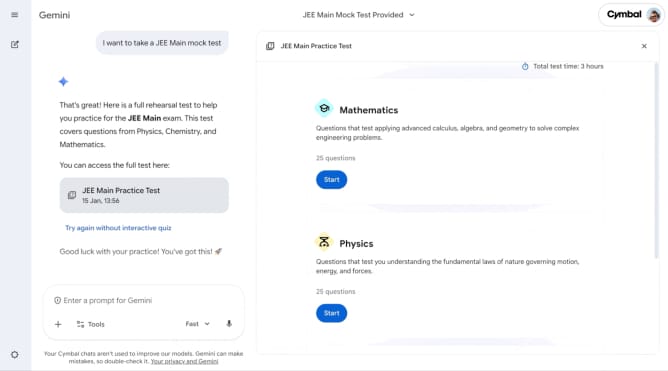
JEE Main prep with Gemini: Students can now take full-length mock tests directly in Gemini, with vetted content from partners like Physics Wallah.
India's first AI-enabled state university: A partnership with Chaudhary Charan Singh University (CCSU) to create a national framework for AI in higher education.
Massive educator training: A program to equip 40,000 Kendriya Vidyalaya teachers with AI competencies.
The "Cognitive atrophy" risk
It’s not all smooth sailing. The Economic Survey 2025-26 has raised a red flag. Relying too much on automated tools could lead to "cognitive atrophy" a decline in critical thinking and creativity. As we rush to adopt AI, the challenge remains: how do we use it to enhance our brains, not replace them?
Why this matters for you
Whether you are a professional upskilling or a parent, India's "playbook" is a preview of the future. The shift from "AI for entertainment" to "AI for learning" is the most consequential trend of 2026.
If you want to explore more about how AI is reshaping global education, read this India is teaching Google how AI in education can scale
Stay curious,
The Flipped.ai Team
Meet Flipped.ai, your AI hiring co-pilot. Get instant candidate matches, automated interviews, and faster, smarter hiring from start to finish.

Want to get your product in front of 75,000+ professionals, entrepreneurs, decision-makers, and investors around the world? 🚀
If you are interested in sponsoring, contact us at [email protected].
Thank you for being part of our community, and we look forward to continuing this journey of growth and innovation together!
Stay curious,
Team Flipped.ai